Motril, Spain: A Complete One Day Guide
 ByDonovan
Table of Contents
ToggleMotril, Spain: The Costa Tropical Port You Didn't Know About
When the Norwegian Dawn pulled into port of Motril, Spain, we’ll be honest we had to look it up. Everyone talks about Málaga, Cádiz, and Barcelona when they think of a Spanish cruise itinerary. Motril? Barely a whisper. But that’s exactly why we loved it.
Tucked into Andalusia’s Costa Tropical, wedged between the Mediterranean Sea and the snow-capped Sierra Nevada, Motril is the kind of place that rewards curious travelers who wander off the well-trodden cruise-port script. We spent our day there wandering the old town, kayaking along coastal cliffs, snorkeling in crystal clea waters and we came away thinking this unassuming Granada province town deserves a lot more attention than it gets.
Here’s everything we learned about Motril, from its surprising history as Europe’s last sugar capital to exactly how to spend your time there, whether you’ve got a few hours off the ship or a few days to properly explore.
Where Is Motril, and Why Should It Be on Your Radar?
Motril sits on the southern coast of Spain in the province of Granada, right in the heart of the Costa Tropical, a stretch of coastline so mild that avocados, mangoes, and cherimoyas grow happily where you’d expect olive trees instead.
It’s about 45 minutes from the city of Granada and roughly an hour from Málaga, which makes it a genuinely useful base if you’re island-hopping (well, coast-hopping) around Andalusia, and a very manageable stop if you’ve only got a cruise-ship day to work with.
What struck us most was the contrast: you can be looking at Mediterranean waves on one side and the Sierra Nevada’s snowy peaks on the other, often in the same glance. That’s not marketing copy that’s just what the town looks like on a clear day.
A Brief History of Motril
Motril’s story starts further back than most visitors expect. The area was first a Phoenician trading post, and archaeologists have turned up plenty of evidence of a Roman presence too, though there’s no proof of a permanent Roman town here. It was the Moors who really shaped Motril, bringing sugarcane cultivation to the region during the Muslim conquest of the Iberian Peninsula, and by the 16th century the town had grown into a genuine economic hub for the whole province.
When the Catholic Monarchs took the region in 1489, sugar production only intensified. Motril eventually became Europe’s last sugar-producing town, with cane fields stretching across the fertile Vega right up until commercial cultivation finally ended in 2006. You can still see the old refinery chimneys dotted around town quiet monuments to an industry that once defined this stretch of coast.
That sugar legacy didn’t disappear entirely, though. It just changed shape. Motril is now home to Ron Montero, the only rum distillery in Europe still open for public tours, where the Montero family has been distilling cane-molasses rum since 1963. If you only do one “very Motril” thing while you’re in town, we’d put this near the top of the list.
What to Do in Motril: Our Day-Trip Itinerary
If you’re stepping off a cruise ship the way we did, you’ll land at the Port of Motril, about 4km from the town centre an easy 10-minute taxi ride, or a shuttle if your cruise line runs one. Here’s how we’d structure the day.
Start at the Historic Centre
We began in Motril’s old town, working our way past the Church of the Incarnation, built in the early 16th century on the site of a former mosque you can still spot traces of it on the building’s western side. From there it’s a short walk to the Sanctuary of Nuestra Señora de la Cabeza, perched on a hill with panoramic views over the town and coastline. Built on the ruins of a Nasrid fortress, it’s Motril’s most recognisable landmark and worth the short climb for the photos alone.
Step Back in Time at the Sugar Museum
The Museo Preindustrial de la Caña de Azúcar (Pre-Industrial Sugar Cane Museum) sits on the excavated ruins of the old Ingenio de la Palma sugar mill, and it’s genuinely one of the more unusual museum experiences we’ve had in Spain. You’ll walk through the story of Motril’s sugarcane industry from Moorish-era cultivation right through to the last harvest in 2006 with English-language tours available. Give it about an hour.
Taste the Legacy at Ron Montero
A short drive from the museum, Ron Montero’s distillery is one of those under-the-radar experiences we love finding on our travels. The free tour and tasting walks you through how the rum is made, why Motril’s sugarcane produced such a distinct molasses, and how one family kept a centuries-old tradition alive after the last sugar factory closed. If you’re planning your timing around this, check current tour hours before you go.
Wander Parque de los Pueblos de América
Right behind the sanctuary, this park is genuinely lovely, full of subtropical plants and trees brought over from the Americas generations ago, a central lake, and a striking sculpture called “The Encounter Between the Two Worlds.” It’s the kind of shaded, unhurried spot that makes you slow down, and it’s an easy stop between the old town and the beach.
Relax on Playa Granada
No visit to Motril is complete without time on the sand. Playa Granada is the town’s showcase beach, with a long promenade connecting it back to the port, and enough beach bars (chiringuitos) to keep you fed and watered all afternoon. If you’re curious about the area’s more unusual history, the former summer residence of Belgium’s King Baudouin and Queen Fabiola sits right on this beach and is open to the public.
Eat Like a Local
Motril takes its food seriously, and we made the most of it. Fresh seafood and dried octopus are the local specialty, we’d recommend seeking it out at one of the beachfront spots near Playa Poniente. If you’ve got time for a sit-down meal in the centre, look for restaurants built around seasonal, tropical produce (a nod to those avocado and mango orchards), and don’t skip dessert, cherimoya, a custard-apple-like tropical fruit grown almost nowhere else in Europe, is worth trying at least once.
Bonus: Charca Suárez for Nature Lovers
If you’ve got extra time, this protected wetland just outside town is home to more than 160 bird species, including herons and flamingos. Entry is free, and it’s a peaceful way to end a day that’s otherwise full of history and eating.
Prefer someone else to handle the logistics? If you’d rather explore with a local guide who knows every backstreet and can time everything around your ship’s departure, Andalusia Travel Tour’s Motril guide covers exactly this kind of one-day itinerary in more detail, including their guided walking tour and shore excursions up to Granada’s Alhambra.
Kayak and Snorkel the Caves at Playa de la Rijana
If you’ve got a car or don’t mind a short taxi ride out of town, this was hands-down one of our favorite discoveries on the whole Costa Tropical.
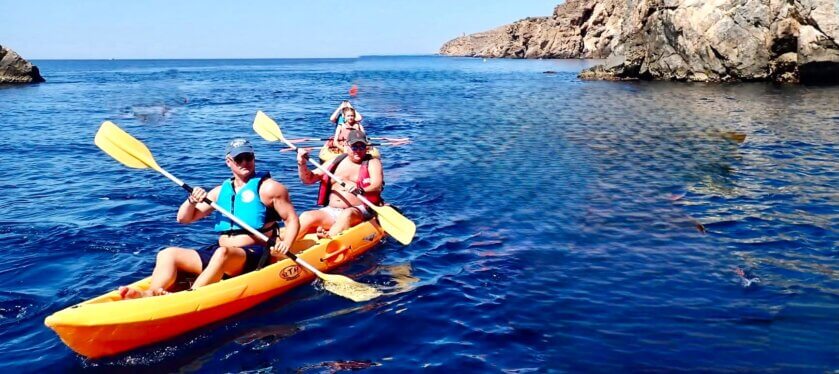
Playa de la Rijana, just along the coast from Motril, is a striking pebble-and-turquoise-water cove backed by dramatic cliffs, and the best way to experience it is from the water.
We booked a kayak and paddle surf excursion with Paddle Surf La Rijana, a small local outfit that runs guided trips along the coastline, paddling into sea caves and stopping to snorkel in some of the clearest water we’ve seen anywhere in Spain. Our guide Javier looked after us the entire way, pointing out hidden coves, keeping an eye on anyone still finding their sea legs, and clearly loving the stretch of coast he gets to work on every day.
If you want a slower, more active alternative to a beach day, this is it.
When Is the Best Time to Visit Motril?
Thanks to that tropical microclimate, Motril is a genuine year-round destination mild winters, warm but not brutal summers, and sea breezes that keep things comfortable. That said, if you want the town to yourself:
Spring (March–May) and early autumn (September–November) are our picks for fewer crowds and pleasant beach weather without the peak-season buzz.
Summer (June–August) is when Spanish holidaymakers descend on Playa Granada, so expect a livelier, more festive atmosphere great if you want energy, less great if you want quiet.
Cruise season typically runs spring through autumn, so if you’re arriving by ship like we did, you’ll most likely land somewhere in that window anyway.
Getting Around Motril
Motril is compact enough to explore mostly on foot once you’re in the town centre, but here’s the practical breakdown:
From the cruise port: A taxi into the centre takes about 10 minutes and costs roughly €10–15. Some cruise lines run a shuttle to the tourist office at no extra charge. The tourism office will have a map of the town showing the taxi ranks.
Uber, Bolt and Lyft were not available in the town, so we had no alternative than to use a local taxi. From the city centre to Playa de la Rijana cost us €29. Its also best to book your taxi back to the city with your driver for a specific time.
TIP – we found it strange that when he collected us, there was already a fare on the meter of €29 for the return trip. Apparently, they start the meter from the staring point. So although we initially thought he was scamming us, it all worked out in the end.
Within town: Walking covers most of the historic centre and park comfortably. For the beaches, port, and outlying sites like Charca Suárez or Ron Montero, a taxi or rental car is the easier option the promenade walk between the port and the beaches is pleasant if you’ve got the time and comfortable shoes.
If you’re extending your trip beyond the cruise stop and want the flexibility to explore the wider Costa Tropical and Granada province at your own pace, renting a car is genuinely the best way to do it the coastal drives alone are worth it.
Where to Stay if You're Extending Your Trip
If Motril charms you the way it charmed us and you decide to turn your cruise stop into a longer visit, the town has options ranging from beachfront hotels to historic countryside estates. We’d recommend browsing accommodation options in Motril and Playa Granada, the beachside apartments around Playa Granada are particularly good value if you want a kitchen and pool for a longer stay.

With a stay at Elba Motril Beach & Business Resort in Motril, you’ll be on the beach, just a 4-minute walk from Platja de Ponent. Its 4 star and offers most luxury amenaties.
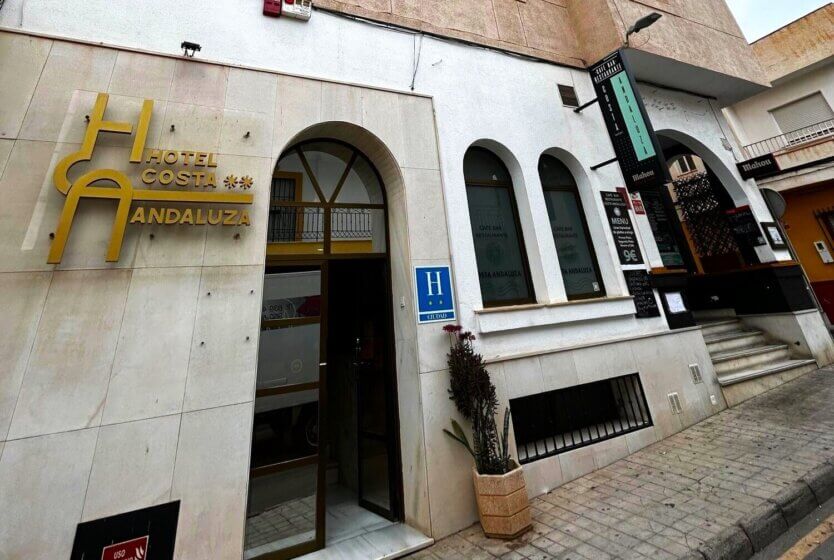
With a stay at Hotel Costa Andaluza in Motril, you’ll be 3.6 mi (5.7 km) from Platja de Ponent. It’s a 2 star budget friendly option.
Final Thoughts on Motril, Spain
Motril isn’t trying to be Granada or Málaga, and that’s precisely its appeal.
It’s a working Spanish town with a genuinely fascinating industrial history, some of the best beach infrastructure on this stretch of coast, and food that hasn’t been dressed up for tourists.
For a cruise stop that most passengers treat as a launchpad to Granada’s Alhambra (a completely valid choice, by the way), we’d encourage you to give Motril itself at least half your day. We’re glad we did.
Our Top Travel Resources
Accommodation: For hotels we always use Booking.com and Agoda . You can also try Vrbo to double check that you’ve found the best rate.
Flights: To find the best flight prices we always check Skyscanner.
Booking.com believe it or not, has also offered us some great prices. Also try Omio, I’ve found that where other airlines do not include baggage, they do at no additional charge.
Car Rentals: We use Discover Cars it’s trusted and compares local, national and international companies.
Activities: If we book organised tours we always check either GetYourGuide or Viator.
Foreign Currency: Whenever we can, we prefer to pay in local currency.
With Revolut you can move funds from your own currency into a local currency wallet. Transactions are free and card less, just tap with your phone. If you need to draw cash, you can also do this if you order the card.
Travel Insurance: We never go anywhere without travel insurance. You never know what will happen on your trip, so good travel insurance like SafetyWing can protect you in case of injury, illness, theft and cancellations.
eSIM: To get data abroad we use Qrispy.
The App uses cutting edge technology so that data never expires, when activated, it automatically connects to the country you’re in and data rates are very competitive. I’m just waiting for them to roll out maritime data and I’m set for those long haul cruises!
Use the TGA referral code 835X3G to get an extra 20% data on your 1st purchase!